1. Calculating Safe Occupancy (Bather Load)
Under HSG179 (Managing Health and Safety in Swimming Pools), the Operator/instructor must determine capacity via risk assessment. For group exercise classes (Aqua/Water Based Fitness), the following density standards apply:
-
Static/Low
Intensity: 2m2
to 3m2 per person.
-
Standard Aqua Aerobics: 3m2 per person (to allow
for full arm/leg extension).
-
High-Intensity / Deep Water: 4m2 to 5m2 per person (to account for increased travel and buoyancy aid "sweep").
-
Equipment Adjustment: When using noodles or buoyant dumbbells, the "working diameter" of each participant increases. Operators should reduce the maximum class capacity by 20% compared to a "hands-only" session.
2. Supervision & Lifeguarding Ratios
The division of responsibility between the Instructor and the Lifeguard must be clearly defined in the Normal Operating Procedures (NOP):
3. Environmental & "Line of Sight" Requirements
The Operator must ensure the following conditions are met for the class to proceed safely:
-
Vital Zone Visibility: The instructor must have a clear, unobstructed view of every participant’s head and chest. If the class size or pool "dead zones" prevent this, the capacity must be lowered.
-
Acoustic Clarity: Music volume must be balanced to ensure the instructor’s safety cues and the emergency whistle can be heard by the furthest participant.
-
Water Clarity: If bather load causes turbidity (cloudiness) that obscures the pool floor, the class size must be reduced for the next session to allow the filtration system to recover.
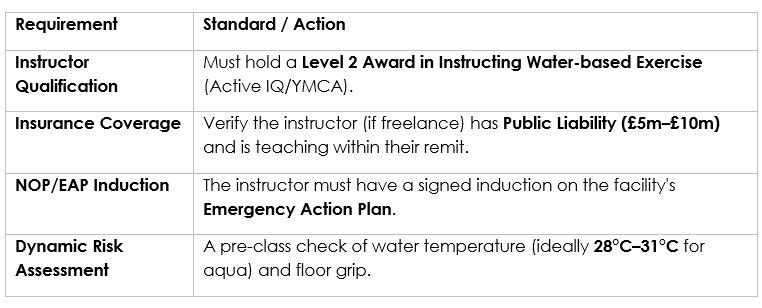
Compliance & Insurance Checklist for Operators